Frozen & Burst Pipe Calls: AI Receptionist for Plumbers
On freeze nights, burst-pipe jobs go to the first plumber who answers. Here's how an AI receptionist picks up 24/7, flags real emergencies and texts you every call.
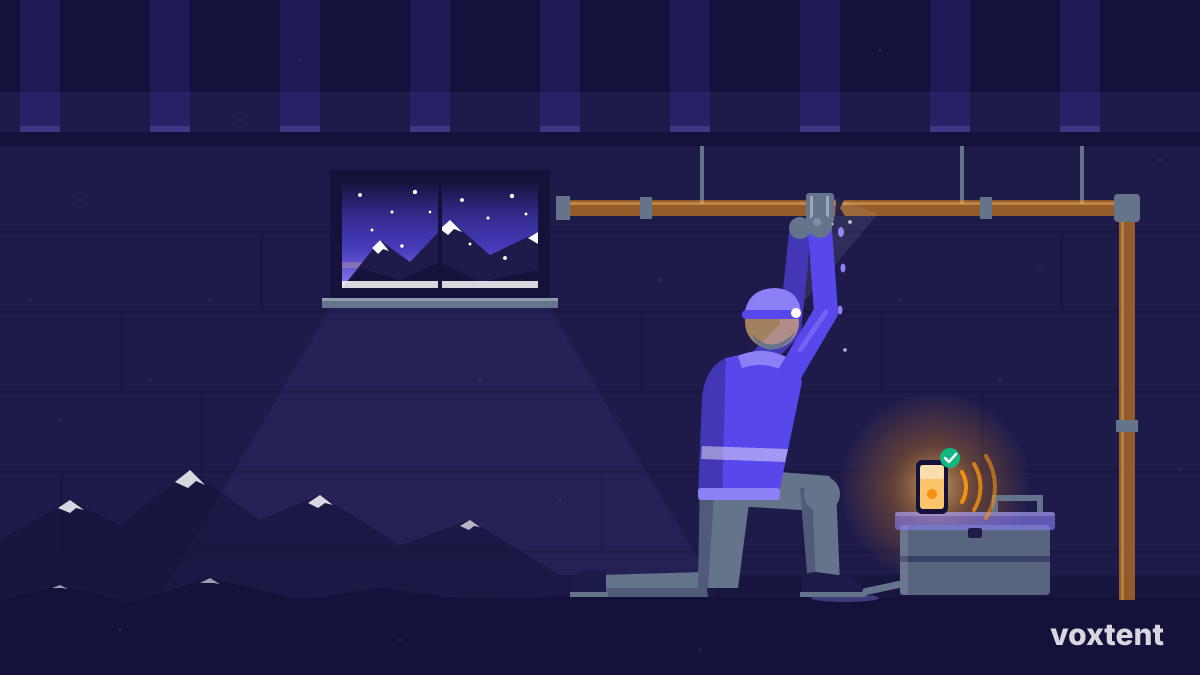
An AI receptionist answers your frozen and burst pipe calls 24/7, picks up in about 3 seconds, flags the real emergencies and texts you a summary of every call. When the first hard freeze hits the Front Range, the homeowner standing in an inch of water at 5 AM reaches your business instead of the next plumber on Google.
In Colorado these calls come in waves. An arctic front drops Denver below zero overnight. A pipe in an exterior wall in Aurora splits, and nobody notices until it thaws and the basement starts flooding. The calls come at 5 AM, at dinner and on Sunday night. The plumber who answers gets the job.
Bottom line: On freeze nights, burst-pipe jobs go to whoever picks up first. An AI receptionist makes sure that's you, even when you're under a house with your hands full.
Why burst-pipe calls go to whoever answers first
A dripping faucet can wait for a callback. A burst pipe can't. Every minute the water runs, the damage grows.
So the caller doesn't leave a voicemail. They hang up and call the next plumber on the list. They keep going until someone picks up.
Freeze nights are also when you and your techs are busiest. You're already thawing a line in a crawl space or cutting out a split section of copper when the next three calls come in. That's exactly when jobs slip away.
Colorado weather makes it worse. A sunny 50-degree afternoon can turn into a single-digit night when a front moves in. Homeowners who left a hose on the spigot or skipped the sprinkler blowout find out the hard way, often on the same morning as everyone else on their street.
What an AI receptionist does on a frozen or burst pipe call
Here's what Voxtent's AI receptionist for plumbers does when a freeze call comes in:
- Answers in about 3 seconds, 24/7, including nights, weekends and holidays. No voicemail, no ringing out.
- Speaks English and Spanish, so a Spanish-speaking homeowner or property manager gets help in their own language.
- Captures the job details: name, address, callback number and what's happening in the house.
- Flags emergencies so you know which calls need you right now.
- Books appointments for lower-priority calls, like a frozen line with no leak or a cracked hose bib.
- Texts you a summary of every call, so you can sort your night from the truck.
You decide what counts as an emergency and how calls get handled. For a closer look at how that sorting works, read how an AI receptionist tells a real emergency from a routine call.
Triage questions worth asking on freeze calls
The better the questions, the better your text summary. Good ones for cold-snap calls:
- Is water actively leaking right now?
- Have you found and closed the main shutoff?
- Is the water near the electrical panel or outlets?
- Is anyone living in the home, or is it vacant?
- Are you the owner, a renter or a property manager?
- What's the property address?
Watch out: Water near an electrical panel is a safety problem, not just a plumbing one. Make sure your emergency rules flag any call that mentions water near the panel or outlets, and know what you'll tell that homeowner when you call back.
How to sort freeze-night calls
Not every cold-weather call is a burst pipe. Here's an example of how a Colorado plumber might set the rules. Adjust it to fit how you run your shop.
| Call type | What the caller says | How to handle it |
|---|---|---|
| Burst pipe, water running | Water is pouring through the ceiling | Flag as emergency, text you now |
| Water near the panel | Basement is wet by the breaker box | Flag as emergency, text you now |
| Burst found, main is off | Pipe split, I shut the water off | Flag as urgent, book first slot |
| Frozen line, no leak | No water at the kitchen sink | Book the next open slot |
| Cracked hose bib or backflow | Outdoor spigot is cracked | Book a regular slot |
Cold snaps also push water heaters past their limit. If those calls pile up for you too, see how an AI receptionist handles no hot water calls.
Get it running before the next cold snap
You keep your existing number and forward calls to Voxtent. Customers still call the number on your truck, your website and your Google listing.
You set your service area, what counts as an emergency and how you want each type of call handled. Then the AI starts answering.
Tip: Start with after-hours only. Forward your calls at night and on weekends, see what comes in during the next freeze, and expand from there. The free 7-day trial gives you room to test it on real calls.
The best time to set this up is October or early November, before the first hard freeze. Not in mid-January, when your phone is already ringing off the hook and you're three jobs behind.
What it costs
Voxtent has three plans:
- Starter: $99/month
- Growth: $297/month
- Done For You: $497/month
All plans are month-to-month. Cancel anytime. Every plan starts with a free 7-day trial. See what each plan includes on the pricing page.
The math is simple. Say one burst-pipe repair nets you a few hundred dollars after parts and labor. That's just an example, so plug in your own number. Now say you miss two emergency calls on one cold weekend because you're elbow-deep in a crawl space. Those callers didn't wait. They called someone else.
If the AI catches even one emergency job this winter that would have gone to voicemail, Starter has likely paid for itself. For the full breakdown, read AI receptionist for plumbers: what it does and what it costs.
Plumbers across the Front Range
Freeze calls look a little different depending on where you work. In Denver and Aurora, it's older homes with pipes in exterior walls and unheated crawl spaces. In Colorado Springs, wind on the Palmer Divide and higher elevation mean colder nights and more frozen lines. Up in Fort Collins, missed sprinkler blowouts show up as cracked backflow preventers.
Wherever you work, the pattern is the same: the calls bunch up on the coldest mornings, and the first plumber to answer wins. See how Voxtent works for plumbers in Denver and Colorado Springs.
Key takeaways
- Burst-pipe callers don't leave voicemails. They call the next plumber until someone answers.
- An AI receptionist answers 24/7 in about 3 seconds, in English or Spanish, and texts you a summary of every call.
- You set the rules: what's an emergency, what gets booked and what questions get asked.
- Keep your number, forward calls, and start with after-hours before the first hard freeze.
- Plans start at $99/month, month-to-month, with a free 7-day trial.
Frequently asked questions
Can an AI receptionist tell a burst pipe from a routine plumbing call?
Yes. It asks the triage questions you set, flags active leaks and other emergencies so you see them first, and books routine requests into open slots on your calendar.
Does it answer at night and on weekends?
Yes. It answers 24/7, including nights, weekends and holidays, which is when most freeze calls come in.
Can I keep my business phone number?
Yes. You keep your existing number and forward calls to Voxtent, so customers still call the number they know.
Does it answer Spanish-speaking callers?
Yes. It speaks English and Spanish, so homeowners and property managers can explain the problem in the language they're most comfortable with.
How much does it cost?
Plans start at $99/month for Starter. Growth is $297/month and Done For You is $497/month. All plans are month-to-month, you can cancel anytime, and there's a free 7-day trial.
Be ready before the freeze
The next arctic front is coming. When it does, make sure every burst-pipe call reaches you, not your competitor. Start your free 7-day trial and have it answering before the first hard freeze.